A steel building is only as good as the foundation supporting it.
While the steel structure provides the strength and durability above ground, the foundation is responsible for transferring loads safely into the soil below. A properly designed foundation helps ensure the building performs as intended for decades while minimizing the risk of settlement, cracking, or structural issues.
Whether you’re planning a shop, warehouse, agricultural building, or commercial facility, understanding the basics of foundation design can help you prepare for a successful project.
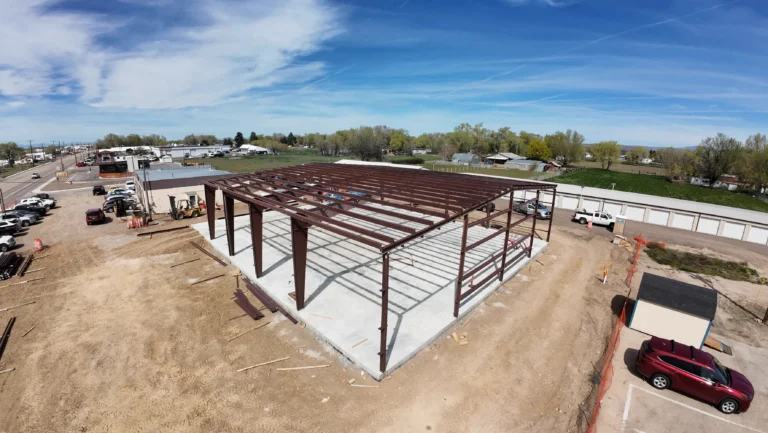
Every steel building relies on its foundation to support:
The foundation also anchors the building and helps resist uplift forces caused by wind.
Because every project site is different, foundation requirements vary based on building size, location, soil conditions, and structural design criteria.
Several foundation types are commonly used for steel building projects.
Slab-on-grade foundations are among the most common foundation systems for steel buildings.
This design typically consists of a reinforced concrete slab with thickened edges around the perimeter and at column locations.
Slab-on-grade foundations are commonly used for:
When properly designed and constructed, slab-on-grade foundations provide a durable and cost-effective solution for many applications.
Some projects utilize individual concrete piers and footings to support building columns.
This foundation type may be used when:
The specific design depends on the building loads and soil conditions at the project site.
Continuous footings distribute loads along the perimeter of the building and may be incorporated into certain foundation designs.
These systems are often used in conjunction with concrete walls or other structural elements depending on project requirements.
Soil conditions play a major role in foundation performance.
Even a properly designed steel building can experience issues if the supporting soil is inadequate.
Factors that may influence foundation design include:
In some cases, a geotechnical investigation may be recommended to evaluate site conditions before foundation design begins.
Idaho’s climate creates unique foundation challenges.
In many areas, foundations must be designed to account for frost depth to help prevent movement caused by freezing and thawing soil.
Frost depth requirements vary throughout the state and can differ significantly between regions.
Projects located in higher elevations or colder climates may require additional foundation considerations compared to projects in milder areas.
Anchor bolts play a critical role in connecting the steel structure to the foundation.
These anchors help transfer structural loads from the building into the concrete foundation while resisting wind uplift and lateral forces.
Accurate anchor bolt placement is essential for proper building erection.
Because steel buildings are engineered systems, anchor bolt locations must match the building plans precisely.
Proper drainage is one of the most overlooked aspects of foundation performance.
Water that accumulates around a building can contribute to:
Site grading should direct water away from the building whenever possible.
Gutters, downspouts, and drainage systems may also help protect the foundation over the long term.
Many foundation issues can be avoided through proper planning and construction.
Common mistakes include:
Addressing these items during the design and construction process can help prevent costly repairs later.
Many property owners assume the steel building supplier designs the foundation.
In reality, foundation responsibilities can vary depending on the project.
The steel building manufacturer typically provides the loads and reactions required for foundation design. The actual foundation design is often completed by a qualified engineer familiar with local soil conditions and building requirements.
Understanding who is responsible for foundation design early in the project can help avoid confusion and scheduling delays.
Not always. Foundation design and construction are often separate from the steel building package.
No. Foundation requirements vary depending on building size, design loads, site conditions, and local requirements.
In most cases, foundation design should be coordinated with the building design to ensure all dimensions and anchor bolt locations are correct.
Improper anchor bolt placement can create significant challenges during building erection and may require corrective work before construction can continue.
Not every project requires a soil investigation, but it may be recommended for larger projects or sites with questionable soil conditions.
A properly designed foundation is one of the most important parts of any steel building project. Understanding foundation requirements early can help improve project coordination, reduce delays, and support long-term building performance.
Steel Building Systems provides design, supply, and installation support for steel building projects throughout Idaho. Our team can help coordinate the information needed for foundation planning and ensure your building is designed for the specific conditions at your project site.
Contact us today to discuss your upcoming steel building project.
We use cookies to improve your experience on our site. By using our site, you consent to cookies.
Manage your cookie preferences below:
Essential cookies enable basic functions and are necessary for the proper function of the website.