Idaho winters can bring significant snowfall, especially in mountain regions and higher elevations. For property owners planning a new agricultural building, equipment shop, warehouse, or commercial facility, understanding snow loads is essential.
Snow accumulation places stress on roofs and structural systems. Buildings that are not properly engineered for these conditions may experience structural damage or long-term performance issues. Steel building systems are designed to handle demanding environmental conditions, making them a reliable solution in areas that regularly experience heavy winter weather.
Understanding how snow loads work and how steel structures are engineered to manage them can help property owners make informed decisions when planning new construction.
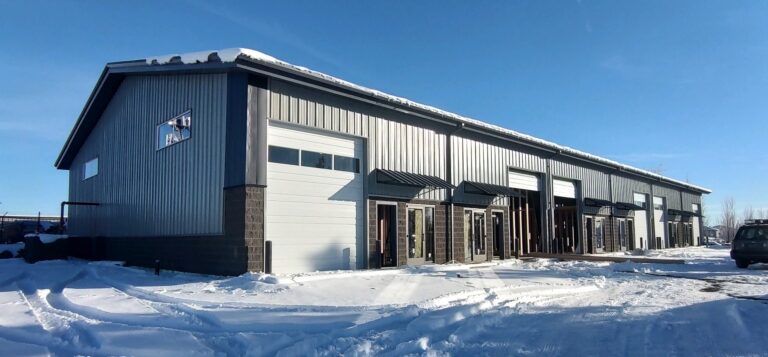
Snow load refers to the weight of accumulated snow and ice on a roof. Engineers typically measure this load in pounds per square foot (PSF).
Several factors influence how much weight a roof must support, including:
Because these conditions can vary significantly, structural engineers design buildings to safely support expected snow loads under worst-case winter scenarios.
Snow load requirements vary widely across Idaho due to differences in elevation and climate.
For example:
Local building codes establish minimum snow load requirements that structures must meet. These requirements ensure buildings remain structurally safe during severe winter weather.
When designing a steel building, engineers evaluate the specific project location and apply the appropriate structural design criteria.
Steel building systems use rigid frame construction, which consists of engineered steel columns and rafters connected to form a rigid frame.
This system distributes loads efficiently throughout the building.
Instead of concentrating stress in one location, the frame transfers loads across the entire structure and down into the foundation. This load distribution allows steel buildings to safely handle significant roof loads while maintaining structural integrity.
Rigid frame systems are commonly used for:
These applications often require large open interior spaces, which steel building systems can achieve without interior support columns.
Another advantage of steel building systems is the use of metal roofing panels.
Metal roofing surfaces are smooth compared to many traditional roofing materials. This smooth surface can help snow slide off the roof more easily, reducing the amount of time heavy snow remains on the structure.
Roof slope also plays an important role. Buildings designed with appropriate roof pitch can further improve snow shedding and reduce the potential for excessive accumulation.
In some situations, snow retention devices may be installed to control where snow slides from the roof to protect entrances, walkways, or equipment areas.
Every building site is unique, and proper structural engineering is critical when designing a building in snow-prone regions.
Several factors must be considered during design, including:
Professional engineering ensures that structural members, connections, and foundations are designed to safely support the expected loads.
When these factors are addressed during the design stage, steel building systems can provide reliable performance for decades.
Steel building systems are widely used throughout the western United States because of their durability and structural performance. When properly engineered for local conditions, these buildings provide dependable protection against heavy snow loads and severe winter weather.
For property owners in Idaho planning a new agricultural, commercial, or industrial building, working with experienced professionals helps ensure the structure is designed to meet both local building codes and long-term performance expectations.
If you are considering a steel building for your next project, it’s important to work with a team that understands structural design requirements for Idaho’s climate.
Steel Building Systems provides design, supply, and installation support for custom steel buildings across the region.
Contact us to discuss your project and learn how a properly engineered steel building can meet your operational needs while standing up to Idaho winters.
We use cookies to improve your experience on our site. By using our site, you consent to cookies.
Manage your cookie preferences below:
Essential cookies enable basic functions and are necessary for the proper function of the website.